
A beautiful floor can still be the wrong floor for a medical office. In this setting, the surface has to hold up to daily cleaning, foot traffic, rolling equipment, and the occasional spill without turning into a maintenance headache.
That is why the right concrete floor finish is picked by room use, not by shine alone. If you’re weighing polished concrete, epoxy, urethane, sealers, or stains, the details below will help you choose a finish that fits healthcare work.
What a medical office floor has to do every day
Medical offices ask more from a floor than most retail or office spaces. The surface has to clean up fast, resist moisture, keep dust down, and stay safe when staff move quickly between rooms.
Minimal seams matter because soil, fluids, and cleaner residue collect in joints and weak edges. That is one reason many healthcare teams favor concrete-based finishes with tight, closed surfaces. A healthcare guide on infection control and floor safety points to the same priorities, cleanability, slip resistance, and resistance to harsh cleaning routines.
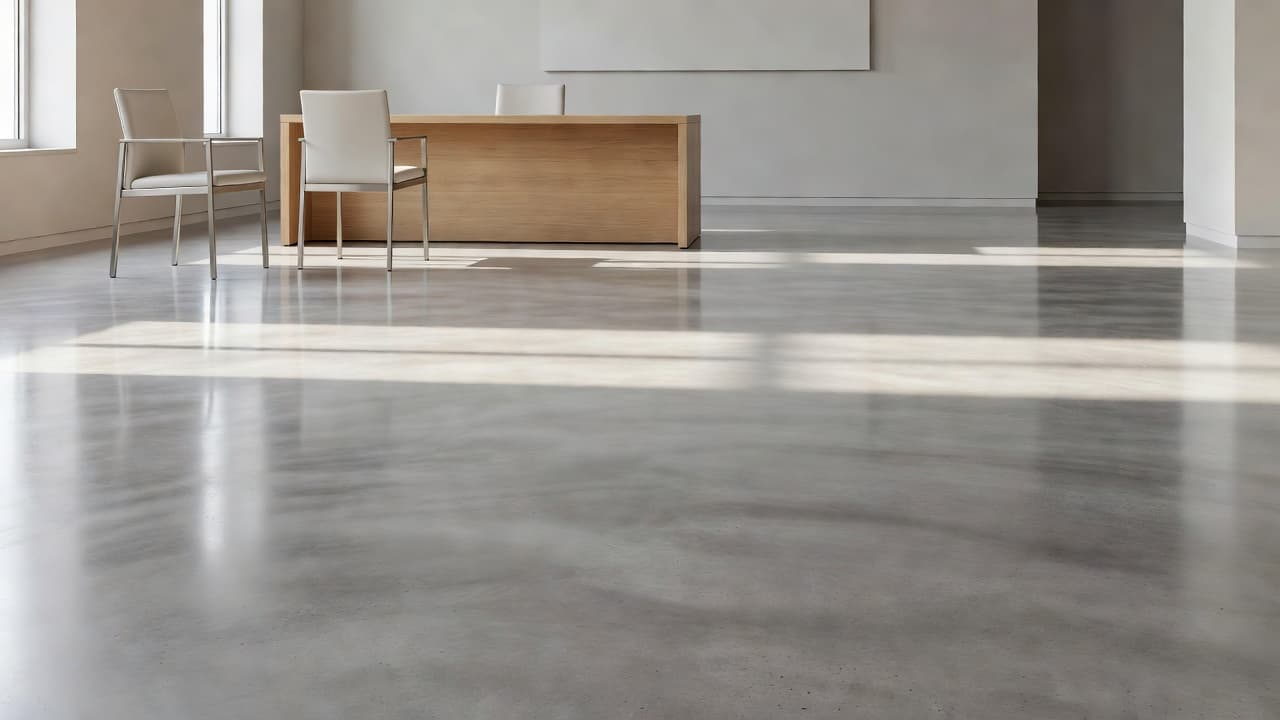
A glossy look can fool buyers. Shine does not tell you whether the floor will stay safe after mopping or under shoe covers. For broader ADA and OSHA flooring considerations, it helps to look beyond the finish itself and check transitions, texture, and maintenance methods.
A floor that looks clean but traps grime in scratches or edge gaps will not stay clinic-ready for long.
Moisture is another major issue. If vapor moves through the slab, film-forming systems can blister or peel unless the installer tests the concrete first and uses the right primer or mitigation layer. Odor also matters in occupied clinics. Even a strong floor can be the wrong choice if curing fumes disrupt patients, staff, or neighboring suites. Flooring decisions should also match local building codes, ADA accessibility requirements, and the office’s infection-control protocol.
How the main finish types compare
The main options each solve a different problem, so side-by-side comparison helps.
| Finish type | Best fit in a medical office | Main upside | Main limit |
|---|---|---|---|
| Polished concrete | Lobbies, corridors, waiting areas | Low dust, easy daily cleaning, long wear | Can feel hard underfoot, traction needs attention |
| Densifier plus sealer | Light-use offices, back-of-house zones | Lower upfront cost, natural look | Less stain and chemical protection than resin systems |
| Epoxy system | Exam rooms, labs, support areas | Strong chemical resistance, easy-to-clean surface | Prep is strict, cure time and odor vary |
| Urethane topcoat system | High-traffic care areas | Better scratch and wear resistance | Added cost and more system layers |
| Stain with protective sealer | Reception areas, branded spaces | Color without tile joints | Decorative value first, protection depends on topcoat |
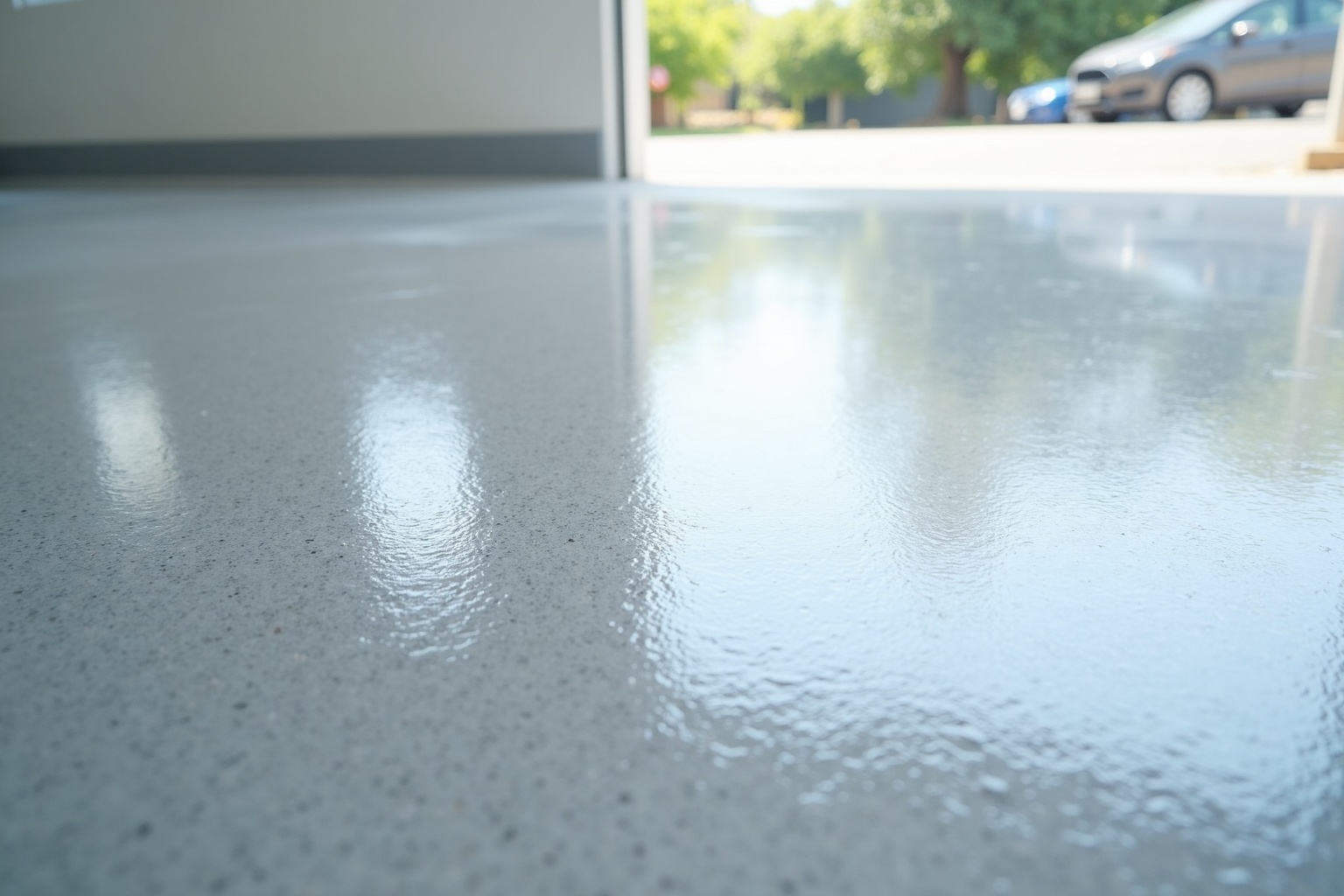
In short, polished and sealed concrete works best where appearance and low routine care lead the list, while resin systems make more sense where spills, disinfectants, and frequent scrubbing are part of the job.
Polished concrete, densifiers, and clear sealers
Concrete polishing is a strong fit for front-of-house medical spaces. It reduces concrete dust, holds up well to foot traffic, and gives a clean look without adding a thick film that can peel.
A densifier hardens the slab surface, and a guard or sealer can add stain resistance. That combination often works well in waiting rooms, check-in areas, and wide corridors. It also avoids some of the odor issues that can come with multi-coat resin systems.
The tradeoff is protection. Polished concrete is not the best answer where harsh chemicals, standing water, or bodily fluid exposure are more common. Traction also needs planning. A highly reflective finish may look slick even when it performs well, so mock-ups and maintenance testing help.
Epoxy, urethane, and polyaspartic coatings
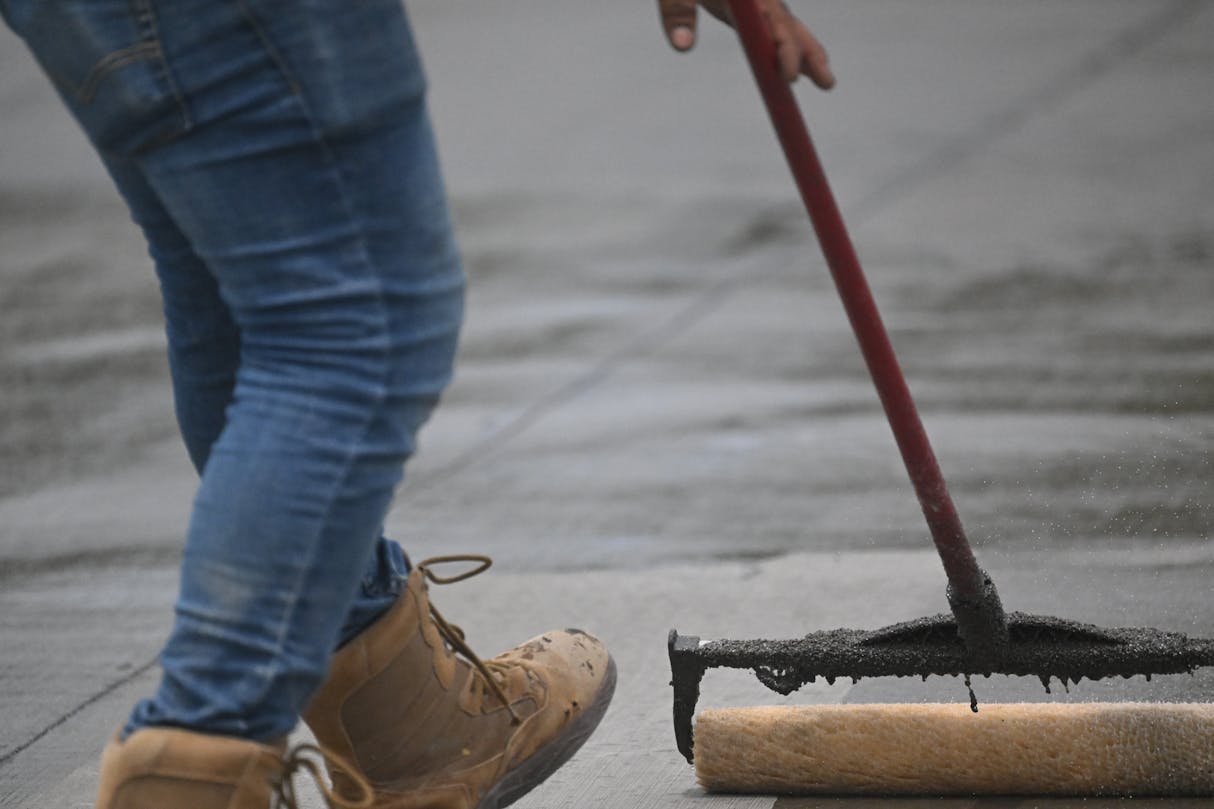
A concrete epoxy coating, sometimes described as an epoxy coating for concrete, creates a protective film over the slab. In medical offices, that can mean better resistance to staining, cleaning chemicals, and repeated wet mopping. A heavier-duty commercial concrete epoxy coating is usually a better match than a light residential kit.
Many systems improve further with a urethane topcoat. Urethane often handles abrasion and scratch wear better than epoxy alone, which matters under carts, stools, and frequent cleaning. A polyaspartic coating may also appear in specifications, either as a fast-curing system or as a topcoat when short shutdown windows matter. Still, fast cure does not always mean low odor, so ask for product data before approving occupied-space work.
Residential marketing can muddy the picture. A product sold as an epoxy coating for garage floor use or a basement concrete coating may perform well in a home, yet medical offices need tighter prep, better detailing at edges, and more thought around downtime and sanitation.
Stains and decorative finishes
Concrete staining adds color without hiding the slab’s natural variation. In reception areas or boutique practices, concrete staining can make concrete feel warmer and less industrial.
Stain alone is not a finish system for clinical wear. It needs a protective sealer or topcoat, and even then, it fits best in lower-risk zones. If your office wants a decorative look with strong cleanability, a stained floor plus a clear protective system can work in public spaces, but exam and treatment rooms often need more protection.
Matching the finish to each medical space
One medical office can contain five or six flooring jobs under one roof. The check-in desk, exam rooms, lab, imaging support, staff corridor, and restroom do not face the same wear.
Polished concrete often works best in waiting areas and major corridors, where traffic is steady but spills are limited. It gives good long-term value when the slab is already in decent shape. Densifier-and-sealer systems also fit private offices, storage rooms, and admin areas where budgets are tighter.
Exam rooms usually benefit from a resin system. An epoxy base with a urethane topcoat gives better resistance to disinfectants, rolling stools, and repeated wipe-downs. If a space handles more frequent fluid exposure, a higher-build coating with integral texture and clean wall transitions may be the safer pick.
Restrooms, break rooms, and utility spaces deserve extra caution because moisture finds weak spots fast. In those rooms, a textured resin finish usually beats a decorative-only system.
Contractor fit matters as much as product fit. A garage floor epoxy coating company may still do solid work, but healthcare jobs call for dust control, schedule coordination, and clear infection-control procedures. The finish is only half the decision. The installation plan is the other half.
Installation, maintenance, and cost that affect value
The slab condition drives both price and outcome. Cracks, soft concrete, old adhesive, and moisture problems all add labor before any finish goes down. If the concrete fails, the coating fails with it.
That is why moisture testing and surface prep should be written into the scope. Shot blasting, grinding, patching, and repair are not optional line items in a medical setting. If a proposal uses vague wording such as “concrete dealing,” ask the bidder to spell out whether that means sealing, patching, crack repair, or moisture treatment.
Upfront cost usually follows system complexity. Densifiers and clear sealers often cost less first. Concrete polishing may land in the middle or higher, depending on how much slab repair is needed. Multi-coat epoxy, urethane, or polyaspartic systems often cost more, yet they can return value when stain resistance, moisture control, and reduced downtime matter most.
Maintenance should stay simple. Polished concrete needs routine dust mopping and pH-neutral cleaning, plus periodic guard renewal if used. Resin floors need the same daily cleaning and occasional topcoat refresh when wear shows. If you’re comparing regional epoxy, staining, and sealing options, ask each installer for a written maintenance plan and a realistic shutdown schedule, not only a finish sample.
Conclusion
Medical offices do not need the flashiest floor. They need one that stays clean, handles moisture, supports traction, and fits the way each room is used.
For many clinics, the smartest answer is a mix of finishes, polished concrete in public zones, resin systems in care areas, and decorative treatments only where they make sense. The best concrete floor finishes are the ones that hold up after the grand opening, when mops, carts, and patients become the real test.